On July 30th, Gwaelod-y-Garth flooded within a couple of minutes of a blast at the Taffs Well Quarry. For over a century various owners of the Quarry have been remorselessly hollowing out the Lesser Garth mountain looming above the village and today the Breedon Group, a giant English construction materials company, are the lucrative Quarry’s owners and operators. They quickly accepted that the flooding was caused by its rock blasts breaking into one of the many underground caverns and voids containing lagoons of water that are a feature of the dolomitic limestone mined at Lesser Garth. Fifteen properties on Heol Berry and Heol y Nant were affected and 13 had to be evacuated when the brown, sediment-laden, filthy water inundated the residential roads as well as the large playing field between them. Also seriously damaged was the Heol Goch connecting route between Pentyrch and Gwaelod-y-Garth.
This frightening event raises a number of important issues:
■There is confusion over which regulator is responsible for underground water and quarry flood risk in Wales. The maps that govern planning decisions show rivers, sea and surface water, while the safety regime that governs quarries is all about rock, explosives and tips. But water beneath a working quarry is governed by neither. Natural Resources Wales (NRW) is the enforcement authority for registered reservoirs, and they are inspected on a statutory cycle (NRW’s most recent inspection in 2025 recorded 405 large raised reservoirs in Wales, of which 277, or 68 per cent, are designated high-risk). But quarries are outside that system and NRW’s statutory responsibilities exclude quarry lagoons and mine lagoons altogether. It is the responsibility of the Quarry operator and the UK’s Health & Safety Executive (HSE) to conduct any inspections.
■HSE and Breedon both conduct periodic inspections at Taffs Well Quarry. The difficulty is that the two regimes are not equivalent. HSE produces a public register, an independent engineer and a defined inspection interval, whereas Breedon produces an internal document not publicly accessible. Moreover, neither addresses water that was never impounded by anyone in the first place, but was naturally sitting in the rock.
■Cardiff Council is the Local Flood Authority (LFA). The UK’s Flood and Water Management Act 2010 requires an LFA to investigate a flood in its area, assess ‘risk management’ and publish the results. However, the duty applies only “to the extent that the LFA considers it necessary or appropriate”. The Act is a typically British vague and toothless box-ticking exercise, designed to look as if something is being done while never threatening the profits of Big Business. It doesn’t even define a significant flood, leaving each Local Authority to set its own criteria and Cardiff Council, always the panting stooge of corporate capitalists, unsurprisingly sets no threshold at all. Fifteen flooded properties and thirteen evacuated households would meet most Authorities’ risk management tests. But the totally inadequate 2010 law cooked up by the Conservative Party conveniently excludes quarry operators from the Tories’ incoherent risk management concept, meaning an investigation can get away with concluding that the HSE and the operators did everything they were supposed to and thus end up telling residents absolutely nothing about why their homes flooded. Typically, this is the approach that Cardiff Council has so far taken. It doesn’t have to be this way, as Neath Port Talbot Council showed after a mine water blowout in Skewen in 2021 by instructing the Coal Authority to implement a mine water remediation scheme. But Cardiff’s bare-minimum approach is intrinsically unhelpful: it’s flood risk strategy for the Gwaelod-y-Garth area complacently and incorrectly states “there is little documented evidence of groundwater flooding in the area and therefore the risk of flooding from this source is small”. On top of this, a Welsh Government-commissioned review in 2023 criticised the lack of clarity and consistency among local authorities about flood investigations, the weak UK law allowing them to be subjective and open to interpretation, and made an unanswerable case for Wales rather than the UK to be in control of its own flood risks. There was no response from the UK Government.
■The complex folding and faulting geology of the Taff Gorge makes a release of stored-water a very likely event. The site has a documented history of quarrying breaking into natural voids and has frequently required remedial measures to make them safe. Beneath Garth Mountain and Lesser Garth are a labyrinth of caves and old iron workings. For instance, Ogof Ffynnon Taf, only uncovered by quarrying at this site in 1986 and subsequently breaking through into Lesser Garth Cave, lies dangerously close to the quarry face. Taff’s Well is also the site of Wales’s only thermal spring, whose waters have circulated to depths of several hundred metres over thousands of years along the fault that crosses the Taff Gorge. So, this is not a settled, well-drained aquifer. It is a complex network of conduits, historic workings and fractures, some of them water-filled. In such a geological environment, it is outrageous that rock should be blasted. Groundwater in this type of topography does not behave like groundwater in a gravel aquifer. It moves through hidden conduits at huge speeds, and where a conduit is intercepted by quarrying activity, the response is immediate rather than gradual, as happened in Gwaelod-y-Garth. That is why a groundwater flood risk assessment in limestone country is a crucial exercise that has serious consequences if it is got wrong or, as in Cardiff’s case, the local authority just uncritically does the operator’s bidding and nods it through .
Since devolution, Wales has slowly made some small steps in bringing Welsh land into Welsh control. The 1966 Aberfan disaster that killed 144 people, 116 of them children, graphically illustrated what happens when the UK is in charge of our country and was the catalyst that eventually led to tangible change. The 2025 Disused Mine and Quarry Tips (Wales) Act introduced a modernised, Wales-wide system for every disused tip, whether coal and non-coal. The creation of the Disused Tips Authority in the same year took over the assessment, registration, monitoring and management of disused tips (Wales has 12,566 disused coal tips, inspected twice yearly and categorised A to D) and a start has been made on the immense task, so far costing £220 million, of removing, reducing and making safe this monstrous legacy of the systematic rape of Wales by the callous British state. But Taff’s Well Quarry is active, not a disused tip, so none of that Act applies to it. Where Wales sees that extraction-industry ground is a distinct hazard, it has the power to take action and enforce registration and an inspection cycle; but where the ground is still being worked, and the hazard is water rather than spoil, Wales has no power at all. This scandalous state of affairs needs to change as soon as possible
Another thing that must change is Cardiff’s local government. In March 2026, five months before the flood, residents of Pentyrch and Gwaelod-y-Garth were campaigning against the damage Breedon’s regular blasting did to their homes. Blasting was taking place weekly and walls and ceilings were cracking; yet Breedon blithely said it had carried out numerous tests over the years and there was no link between the cracks and the blasts, and Cardiff Council said that the quarry complied with its own approved vibration and noise management rules and dismissed the complaints. The data that would properly answer the residents’ complaints exists, but it is not made public by both Breedon and the HSE while Wales, let alone the local residents, has no access to it. Working hand in glove with these enemies of Wales, its people and its environment is, as ever, the rightwing British nationalists of Cardiff’s Labour-controlled Council, who always place the interests of voracious, unaccountable profiteers above the interests of the people of Cardiff. Shockingly, the Council’s latest Local Development Plan includes a 4.6-hectare extension to Taff’s Well Quarry, promoted by Breedon. The precise opposite should happen: Breedon’s quarrying that brings not one penny to Wales and just ransacks Welsh resources and wrecks the Welsh environment should be brought to a halt. And Labour’s usual hypocritical squeals about ‘jobs’ and ‘growth’ should be silenced in perpetuity. The handful of jobs in the Quarry are nothing compared to the hundreds of fulfilling, satisfying and constructive jobs that would be created by the repair, the making safe, the restoration of nature, the protection of the woods, the tending of the wondrous cave system and the securing of the amazing underground lakes in Cardiff’s extraordinary hollow mountain.
***
I wanted to see how the flood damage has been tackled, so this week I took a train from Queen Street to Taffs Well and spent a lovely warm September day wandering around Gwaelod-y-Garth. There was lots to see, especially for a railway buff like me. As this article has quite enough words already, I’ll let a few pictures do the talking:
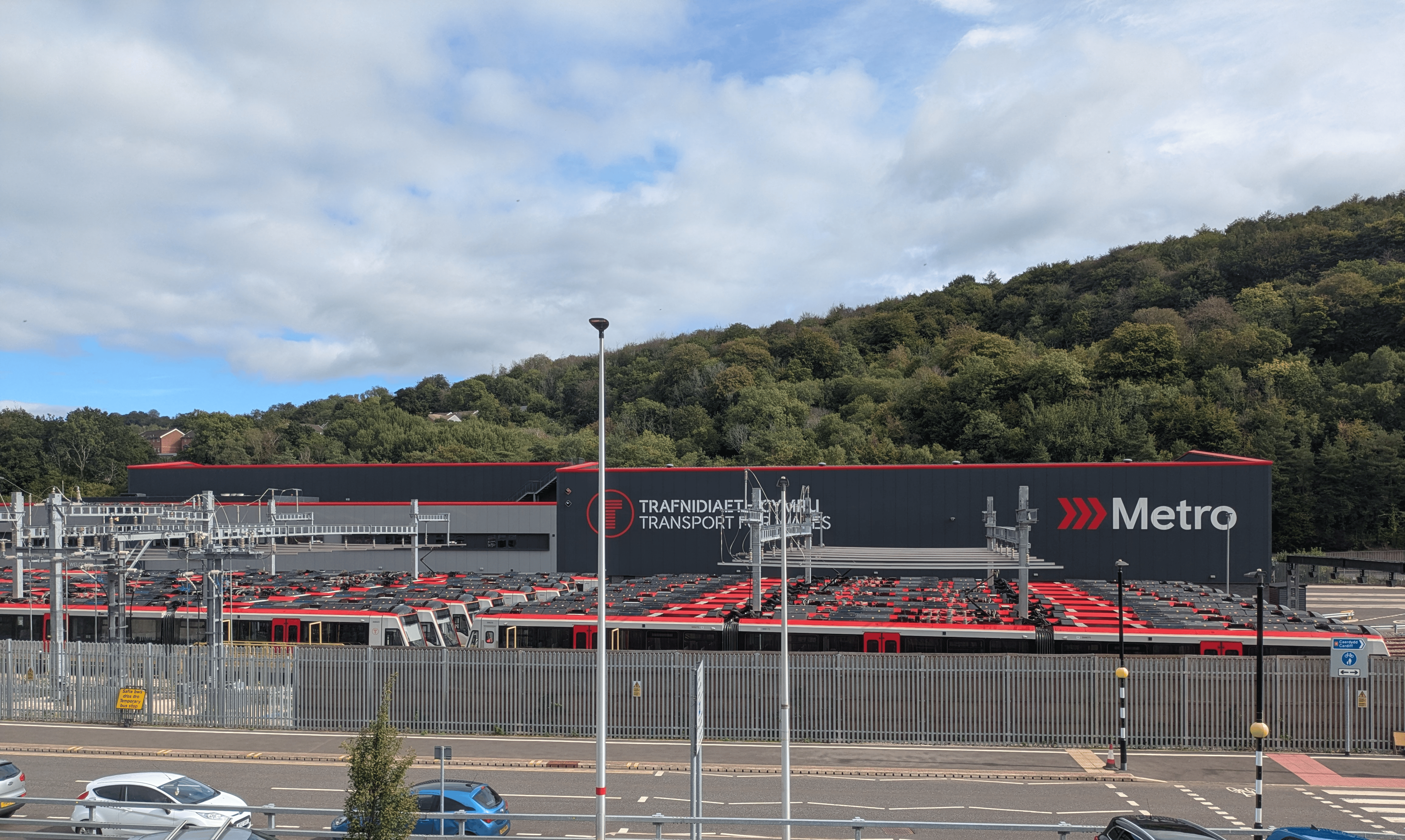
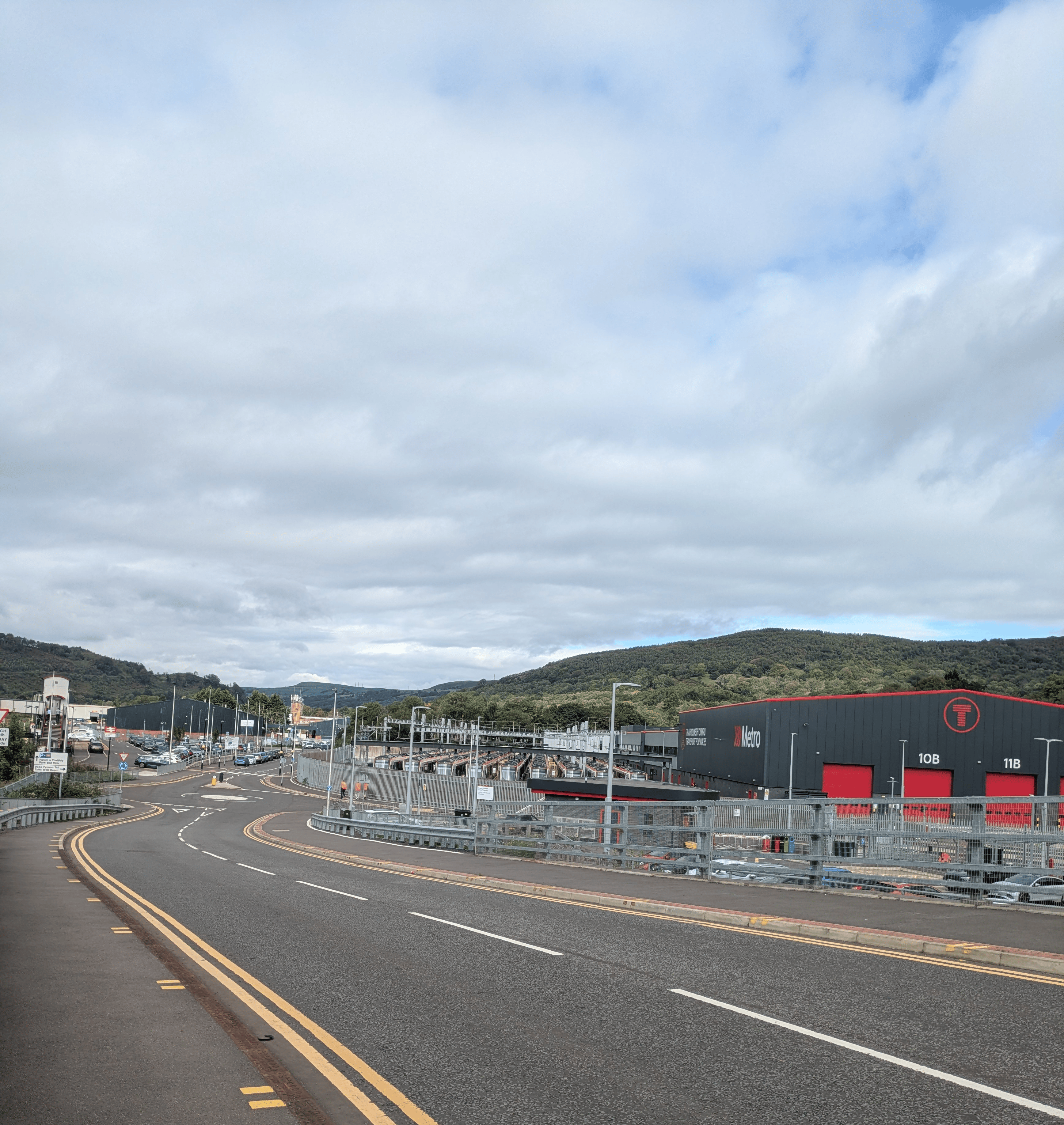
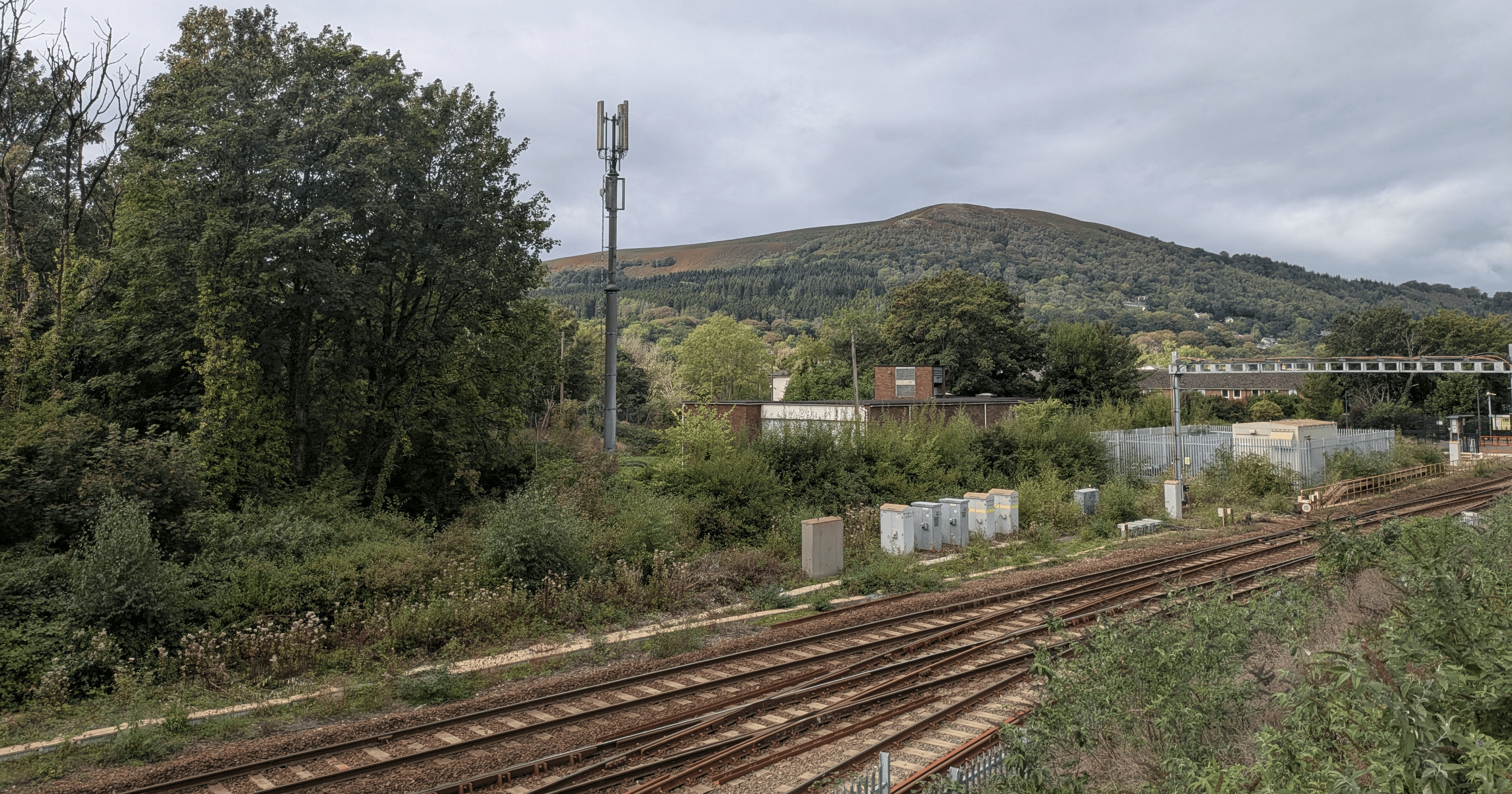
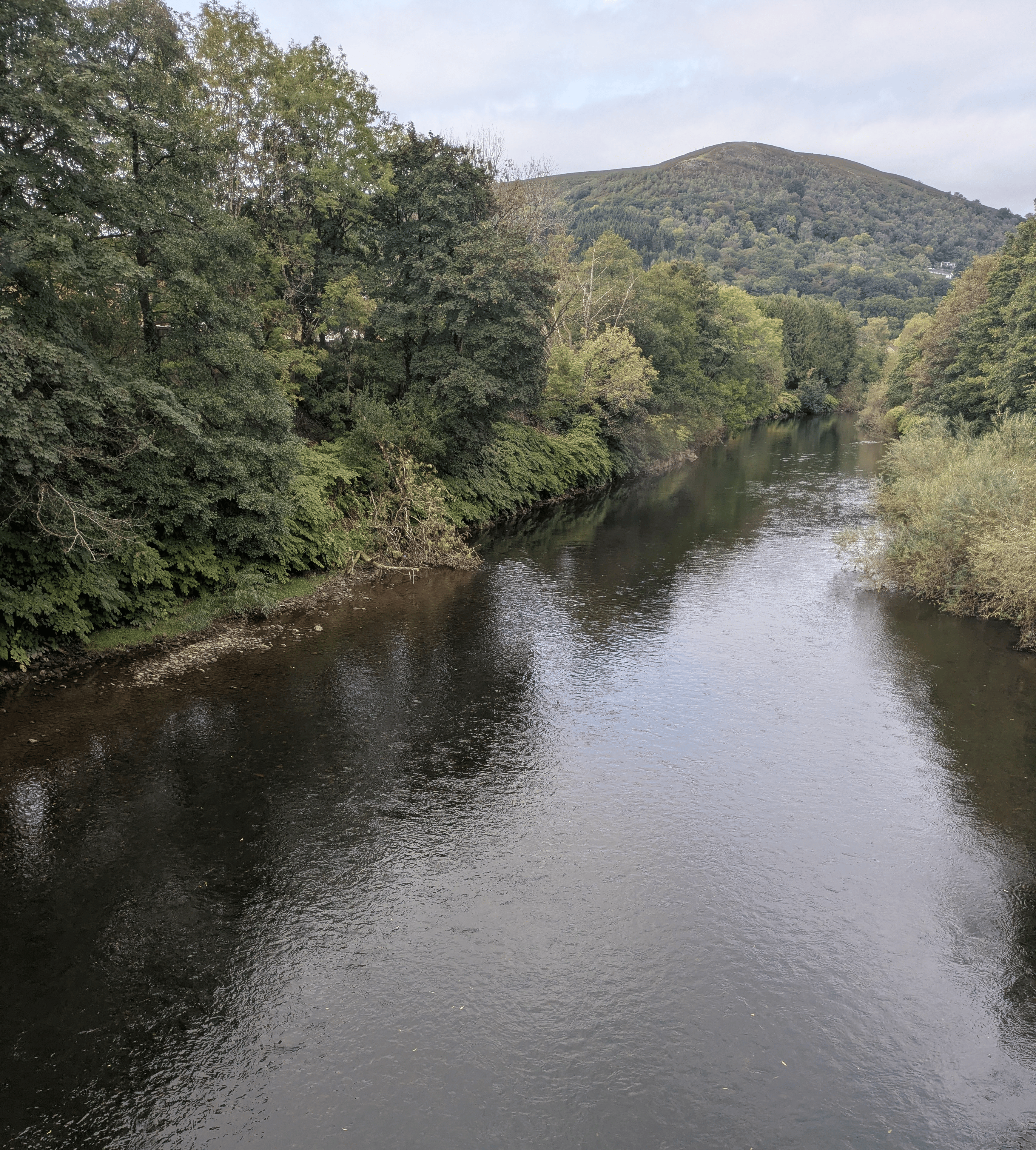


Photos: Dic Mortimer
Dic, another great article sticking up for vulnerable households. Proves again how money is power.
It’s a beautiful part of the world.