Power Stations
Working Street, Eldon Road, Colchester Avenue
The first public supply of electricity in Cardiff was a speculative endeavour of the Anglo-American Brush Electric Light Corporation. The business, founded in 1876 by Charles Brush (1849-1929) of Cleveland Ohio, originated as the Brush Electric Light Company following his inventions of a much improved electric dynamo and the first arc lighting that was practicable to manufacture. Brush electric lamps rapidly spread across northern cities of the USA and he expanded into London in 1880 and thence to large towns across Europe, including Cardiff in 1884, where he snapped up the fledgling Great Western Electric Light Company that earlier in the year had attempted to light the length of St Mary Street by electricity.
A small, functional plant was built on the site of the open-air Fish Market on Working Street, which had replaced demolished Thomas Court in 1860. Advances in electrical technology soon made this operation redundant (it conveyed power that was only available in the evening through dangerous overhead wires) and in 1894 the Council took over complete responsibility for the town’s electricity supply and established its own generating station at the far western end of Eldon Road, which ran parallel with the mainline railway through Riverside (Eldon Road would be renamed Ninian Park Road in 1912 when Ninian Park Station was opened nearby to serve Cardiff City’s new ground).
The Brush Company’s plant on the Working Street/Hills Street corner was converted back into a Fish Market in 1901, but this time as an indoor facility with 25 stalls on the ground floor. Brush’s defunct basement became an electricity sub-station and a new upper floor was added to act as the HQ of Cardiff Corporation’s extensive tram network (a tramway parcels depot was established across the road in 1911, and this survives today as the Hayes Island Snack Bar). Countless mergers, takeovers, acquisitions and amalgamations later, Brush nowadays is owned by a giant private equity firm based in New York.
The tramways HQ relocated to Roath in the 1920s (see below) and, as Cardiff’s fishing fleet withered away, the Fish Market closed for good in 1935. The entire building was then comprehensively refurbished and given a striking new exterior by architect Percy Thomas (1883-1969) to become the offices of the Council’s electricity supply operation. After WW2, local electricity suppliers were replaced by publicly-owned regional electricity boards, so its next incarnation was as the showrooms of the South Wales Electricity Board before they relocated in 1970 to swish new offices in St Mellons that obliterated ancient Gwern Fawr Farm. Furniture chain Habitat moved in and flogged sofas, lampshades and stripped pine there for over 30 years before being sunk by massive debts (it’s now just a trading name of Argos within the Sainsbury’s group). Today the old Fish Market is one of three Cardiff branches of steakhouse Miller & Carter, one of the many execrable brands of Birmingham-based ‘hospitality’ undertaking Mitchells & Butlers.
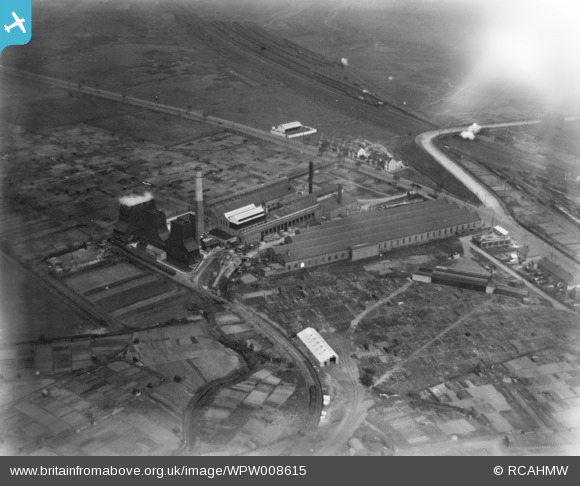
Returning to the Eldon Road Power Station, the chunky, unadorned block was squeezed into spare ground where Eldon Road bent south-west to join Leckwith Road. It housed triple expansion and condensing engines coupled directly to state-of-the-art dynamos, was supplied with coal via a siding off the adjacent railway, had a cooling-pond to the west of the building and delivered a generating capacity of 740kW. This seemed plenty in 1894, but almost immediately it was apparent this capacity was nowhere near enough to meet the exponentially rising demand for electricity. Eldon Road Power Station was boosted as much as possible, to the point where it had a generating capacity of 900kW by 1922, but by then it was merely a useful supplement to the gargantuan Roath Power Station. Eldon Road continued to generate electricity for Cardiff until it was decommissioned and demolished after WW2. Nowadays the site is occupied by used car dealership Jeff White Motors and the Crafty Devil Brewery. The only remaining vestiges of the Power Station are abandoned remnants of its track connection to the mainline railway (I recently hoisted myself to the top of the perimeter wall to take a sneaky peek – a foolish action definitely not recommended for reasons far too numerous to list here).
Built in 1902 on what was then the rural eastern edge of Cardiff where Newport Road traversed the marshy, flood-prone common lands crisscrossed by streams from the hills seeping into the tidal River Rhymni, Roath Power Station was judiciously positioned for both the supply of water from the Nant Fawr, the Rhymni’s largest tributary, and the delivery of coal from the Taff Vale Railway’s Roath Branch, a coal freight line opened in 1888 (closed in 1968 and subsequently scandalously obliterated) which ran from the TVR mainline at Llandaff North around the east of Cardiff and down to the 1874 Roath Basin and the 1887 Roath Dock. The Power Station had four 300kW generators and was initially intended just to provide electricity for the Corporation’s tramways, meaning the Tram Depot was simultaneously constructed next door.
Granted city status in 1905, Cardiff voraciously gobbled up the surrounding countryside from then on – an inexplicable craving for sheer size as an end in itself that hasn’t ceased to this day. As Cardiff grew and the demand for electricity went off the scale, so did Roath Power Station. Its original function as an adjunct of the tram system soon became incidental – although the administration of the city’s tramways relocated in 1922 from Working Street to a new office next to the Tram Depot and by then the network was a thriving and essential component of the city. At its peak in 1930 the well-run, well-maintained, very popular and profitable system had 20 miles of tramway comprising seven lines covering the whole city – oh, for such a public transport system today! For no good reason the Council decided to abandon trams in the 1940s and the track and tramcars were allowed to become ever more decrepit until the last tram trundled through Cardiff in 1950. Trolley buses gradually replaced trams from 1942 onwards until that clean, sustainable, electric form of public transport was also ditched in favour of polluting, carbon-intensive motor buses and the final trolley glided to the scrapyard in 1970. As Transport for Wales tries to reintroduce a desperately needed, environment-friendly mass public transport network to contemporary Cardiff, one can only look aghast at Cardiff’s abiding saga of short-sighted and stupid local governance.
Roath Power Station became a vast behemoth. New capacity was added in 1923, 1924, 1925 and 1928 taking output to 32,000kW, with boilers, reciprocating engines, AC and DC generators and turbo-alternators galore. High pressure plant was installed in 1942 along with two colossal, fat cooling towers that were visible right across Cardiff and by 1957 the Power Station was generating an enormous 500,000MW of electricity. By no stretch of the imagination was it a thing of beauty, but nevertheless it was somehow majestic in its unapologetic, honest utility. Colchester Avenue, climbing up Penylan hill on the eastern flank of the Power Station, was laid out in phases from the 1930s to the 1950s.
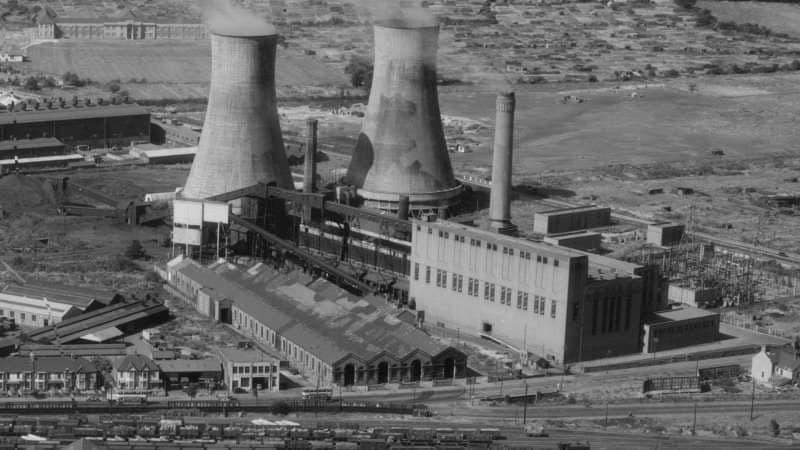
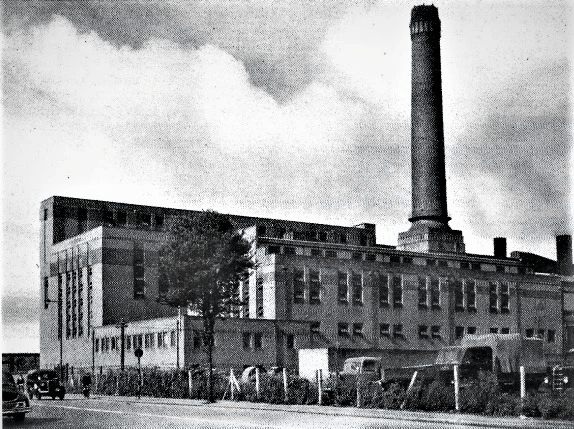
The post-WW2 Labour government nationalised electricity in 1948 and ownership of Roath Power Station passed to the British State. All the 625 locally-run electricity companies were vested in 12 area electricity boards and inevitably the drive to rationalise provision into fewer and fewer outlets, to follow the dictums of economies of scale and to shift the primary power source from coal to oil, gas, hydro and nuclear meant the closure of hundreds of power stations around the UK. Roath Power Station closed down in October 1970 and its demolition was completed in 1975.
At this juncture Newport Road from the Power Station eastward to the foot of Rumney Hill was a mix of garages, warehouses, a dairy, a pottery, a brick works, allotments and, on the Colchester Avenue corner opposite the Power Station, the Willie Seager Memorial Homes. These were 10 cute arts & crafts style bungalows arranged in a semi-circle around a lawn that had been built in 1939 by William H Seager (1862-1941) to house retired seamen. Cardiffian Seager was a ship owner and a thoroughly decent man who had been Liberal MP for Cardiff East between 1918 and 1928. He never really got over the death of his son Willie Seager (1893-1916), killed by sniper-fire near Neuve Chapelle in France during WW1 when only 23, and these cottages were part of many memorials to Willie junior he funded in Cardiff – including an operating theatre at Cardiff Royal Infirmary, a bed at the Hamadryad Seamen’s Hospital, stained glass windows at Conway Road Methodist Church and Roath Road Wesleyan Chapel, plaques at Cardiff High School, Whitchurch Hospital and the Coal Exchange, and even the Seager Baseball Cup that Cardiff schoolchildren competed for annually until the uniquely Cardiffian sport was wiped out by global Americanisation and homogenisation.
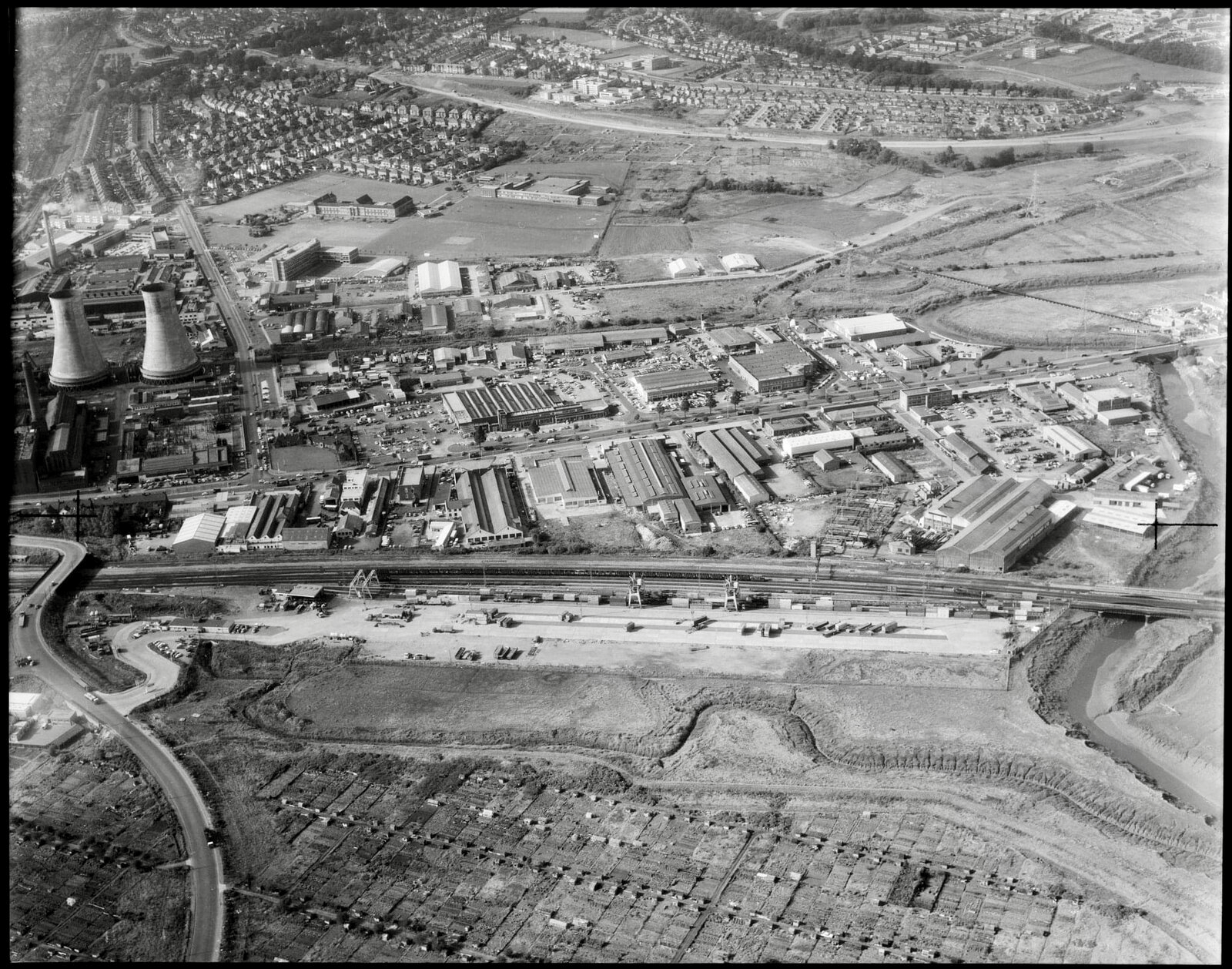
Newport Road became a hideous, traffic-snarling stretch of ghastly superstores in the 1980s and all the chains you can find anywhere in the UK took over in an ever-changing roster of tacky consumerism. The site of Roath Power Station is currently occupied by an abandoned branch of Carpetright and a Sainsbury’s either side of a remnant electricity sub-station while the Nant Fawr has been diverted into a dead straight gutter and the old course of the brook is a dried up trench choked with litter. The Tram Depot adapted to trolley buses and then motor buses before being demolished in 1992 and its position is now occupied by a contemptuously ugly mess of retail sheds. The Willie Seager Memorial Homes were pulled down in 1995 and the site is currently taken by branches of Sofology, Tapi Floors and Pets at Home – but at least the Seager Trust ensured pleasant replacements were built nearby at the eastern end of Westville Road where the embankments of the TVR’s Roath Branch once stood. As for Colchester Avenue to the rear of the Power Station, it had developed as the grimy but purposeful Colchester Factory Estate from the 1940s and this survived the Power Station’s demise (I covered the businesses that operated here under ‘The Three Brewers’ entry in Pubocalypse 9). Now, though, most of that has also gone and been replaced by an estate of yet more cul-de-sacs of ersatz, ‘town houses’ and blocks of flats to join the mass of little boxes that have eliminated the allotments, the schools and the green sward on the other side of Colchester Avenue.
But the worst thing about all this is what has happened to the power industry in the UK and therefore, owing to our position as a helpless English possession, has been inflicted on Wales. Thatcher’s privatisation of the UK energy market in the 1980s has been, like all her privatisations, an unmitigated disaster. Contrary to all the promises of cheaper power, of the benefits of competition, of increased investment and power generation, and of long-term stability and energy security, the precise opposite has happened. The ‘market’ is run as a cartel by just six companies, four controlled from France, Germany and Spain, and all notorious for appalling customer service, rampant profiteering, endless price rises, dishing out vast dividends to shareholders and scandalous bonuses to executives, paying derisory levels of corporate tax and exporting profits overseas, investing peanuts in the domestic energy infrastructure so making the UK perilously dependent on imports, abandoning prudent storage of reserves the better to boost profits further leaving the UK horribly exposed to price shocks, bankrupting 25 asset-stripped energy companies, and all this while the toothless regulator Ofgem, supposedly existing to protect customers and prioritise long-term energy needs, completely fails to discharge its responsibilities.
Privatisation has delivered rip-off practices, a trail of bankruptcies, scary energy insecurity, brazen robbery, zero competition and price rises that beggar belief. And now the new UK Labour government is taking away even the paltry winter fuel payments made to pensioners who struggle to survive on the lowest state pensions in Europe, all in the name of a never-ending ‘austerity’ that never includes the fat-cats and the super-rich. This is the rotten to the core British State at its cruel, wicked worst. All people in Wales with principles, intelligence and courage must join the struggle to free our much abused country from the clutches of these terrible British bastards.
Pictures: RCAHMW; Creative Commons; Stewart Williams Collection; Creative Commons
educational and entertaining, spot on – as ever
Yet another excellence piece of local history and commentary.
I had great affection for the cooling towers in Colchester Avenue. Returning from England on my old motorbike, the sight of them up ahead as I trundled down Rhymney Hill always meant that I was nearly home at last.
The replacement Seager Trust cottages, is it Westville Place or Westville Road?
For some reason I got it into my head that the spur on the other side of the lane at the east end of Westville Road, added in the 1990s when the new Seager Cottages were built, was called Westville Place – but it isn’t, it’s just more Westville Road! Correction made, thanks for noticing Gav.